From Anti-Ageing to Longevity: Modern Skincare for Long-Term Skin Health
الصفحة الرئيسية:موضوعات البشرة
article.category:أمراض البشرة
For a long time, the focus in skincare was on visible ageing – now a new guiding principle is taking centre stage: the longevity of the skin. Rather than concealing symptoms, the aim is a sustainable approach to healthy, resilient skin – "skingevity" – today and in the future.
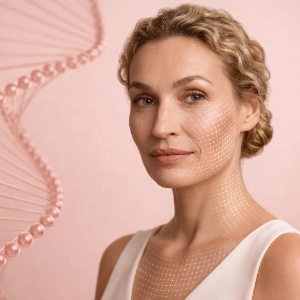
Image description: Visual at top of page created using AI assistance (ChatGPT/Gemini/Canva).
Background: The shift in science, culture and self-perception
‘Longevity’ – the principle of lasting vitality – is no longer an abstract concept of the future. In the context of skincare, also referred to as “skingevity”, the concept has established itself as an interdisciplinary guiding principle across medicine, science, society, and cosmetics. The focus is not merely on lifespan, but on the quality of that life – including, and particularly, in relation to the skin.
The shift towards a holistic understanding of skincare reflects profound developments:
- Demographic change: The global ageing of society requires solutions that go far beyond short-term results.
- Biotechnological innovations: Advances in genetics, epigenetics and cell biology enable a deeper understanding of skin ageing and open up new approaches to skincare.
- Personal responsibility and prevention: People are increasingly striving to proactively influence their biological skin ageing – supported by wearables, nutritional strategies and personalised skincare concepts.
- Science-driven investment: Renowned investors are supporting the development of technologies to promote cellular longevity – including in the context of the skin.
The new skin philosophy
For decades, the term ‘anti-ageing’ dominated the skincare industry – characterised by the pursuit of smooth, younger-looking skin. Yet today, a fundamental shift in perspective is emerging: away from merely treating symptoms, towards a sustainable approach aimed at the long-term maintenance of skin health: longevity.
Modern longevity research views ageing not as passive decline, but as an active biological process that can be influenced. The focus here is on the extension of the so-called “healthspan” – that is, the years of life during which the body (and the skin) remains healthy, vital and functional.
Longevity is no longer merely a medical concept, but a cultural one. It is about living consciously, about mindfulness towards one’s own body and the environment. This holistic perspective ranges from cellular health to mental well-being.
Technologies such as artificial intelligence, personalised diagnostics and biometric tracking are increasingly supporting this approach – including in skincare. The aim is to take preventive measures before visible damage occurs.
More than anti-ageing
The skin’s epigenetic profile is shaped from a young age – by diet, the environment, stress and UV exposure. Skin Longevity therefore sees itself not as a corrective measure, but as ongoing support. The aim is to strengthen skin function at an early stage and maintain it in the long term.
Unlike traditional skincare approaches, which primarily react to visible signs of ageing, Skin Longevity takes a holistic view: it combines ingredients with behavioural recommendations, integrates dermatological research with lifestyle considerations, and views skincare as a systemic concept.
Examples of measures include antioxidant complexes, barrier-strengthening care, UV protection and targeted micronutrient supply – complemented by sleep quality, exercise and mindful sun exposure.
“We view skincare as a long-term responsibility – for healthy skin today and in the future.”
Epigenetics: The key to cellular skin health
Ageing is not an isolated event, but a dynamic process influenced by environmental factors, lifestyle and genetic predisposition. Epigenetic changes – that is, the regulation of gene activity without altering the DNA – play a central role in this.
UV radiation, oxidative stress or chronic stress can alter epigenetic markers, thereby suppressing the skin’s protective or regenerative gene functions. The consequences: reduced collagen production, susceptibility to inflammation, and impaired barrier function. However, these processes are in principle reversible – through targeted, evidence-based skincare.
An increasing number of studies show that skincare products containing epigenetically active ingredients can specifically slow down skin ageing. Yet a holistic approach is crucial: external measures are effectively complemented by sufficient sleep, a balanced diet, exercise and mental balance.
Louis Widmer: Skin Longevity as a philosophy
What is understood today as “Skin Longevity” has been standard practice at Louis Widmer for decades: highly effective and well-tolerated skincare that acts preventively, supports the skin’s own functions and promotes long-term skin health. The formulations are based on scientific expertise, with the aim of sustainably maintaining and improving the skin’s resilience, regenerative capacity and functionality. In doing so, every product combines dermatological expertise with cosmetic excellence.
Since 1960, Louis Widmer has pursued a clear, scientifically grounded approach to skincare:
- Prevention before intervention: the aim is not the illusion of eternal youth, but the long-term maintenance of healthy skin. Beautiful skin is healthy skin.
- High tolerability through functionality: Every product is designed to promote skin resilience – for all skin types, including sensitive skin. Highly effective. Highly tolerable.
- Reliability through evidence: All developments are based on dermatological expertise and scientifically proven active ingredients. Dermatological competence. Cosmetical excellence.
Looking to the future: anti-ageing gives way to long-term thinking
The concept of longevity does not mean escaping ageing, but rather understanding it better – and shaping it actively, healthily and consciously. This new approach to skin ageing is characterised by long-term thinking. Skin Longevity therefore stands not only for a new skincare concept, but for an attitude: for skin that not only lives long, but remains healthy for a long time.